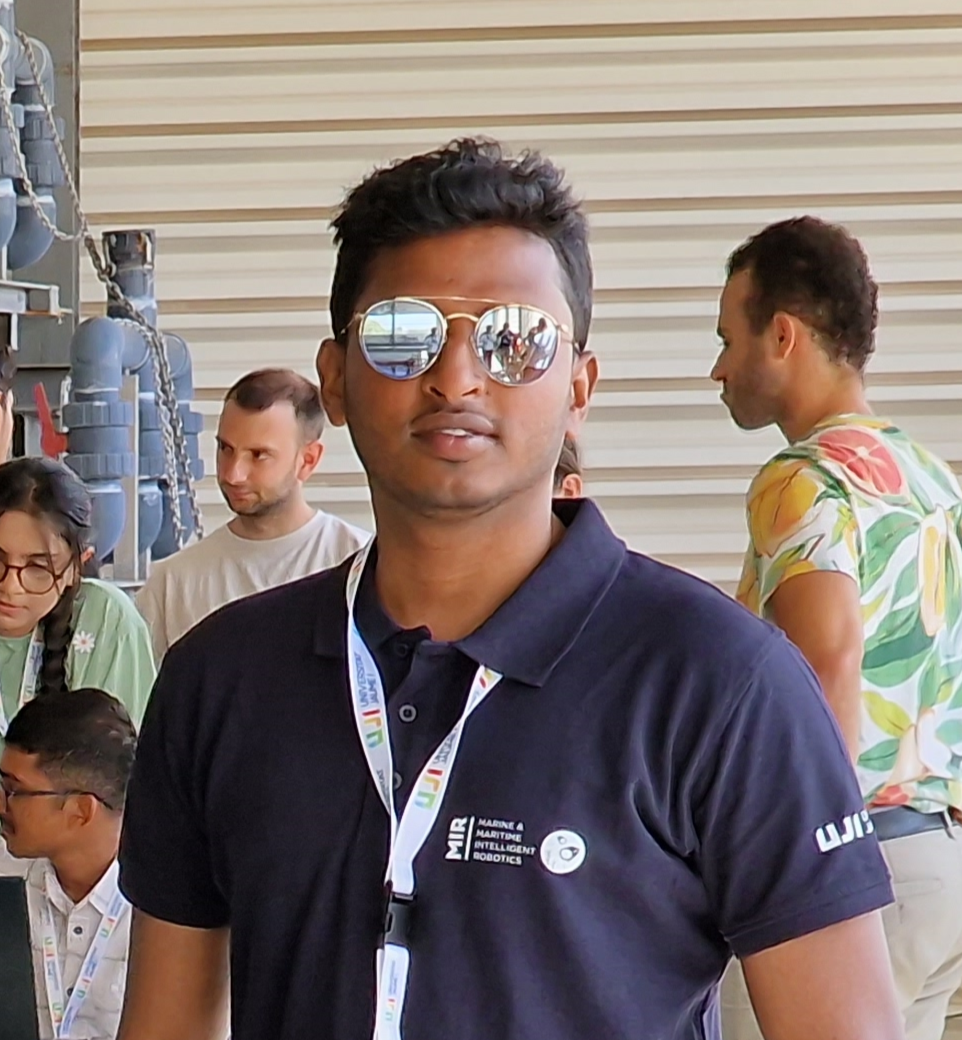
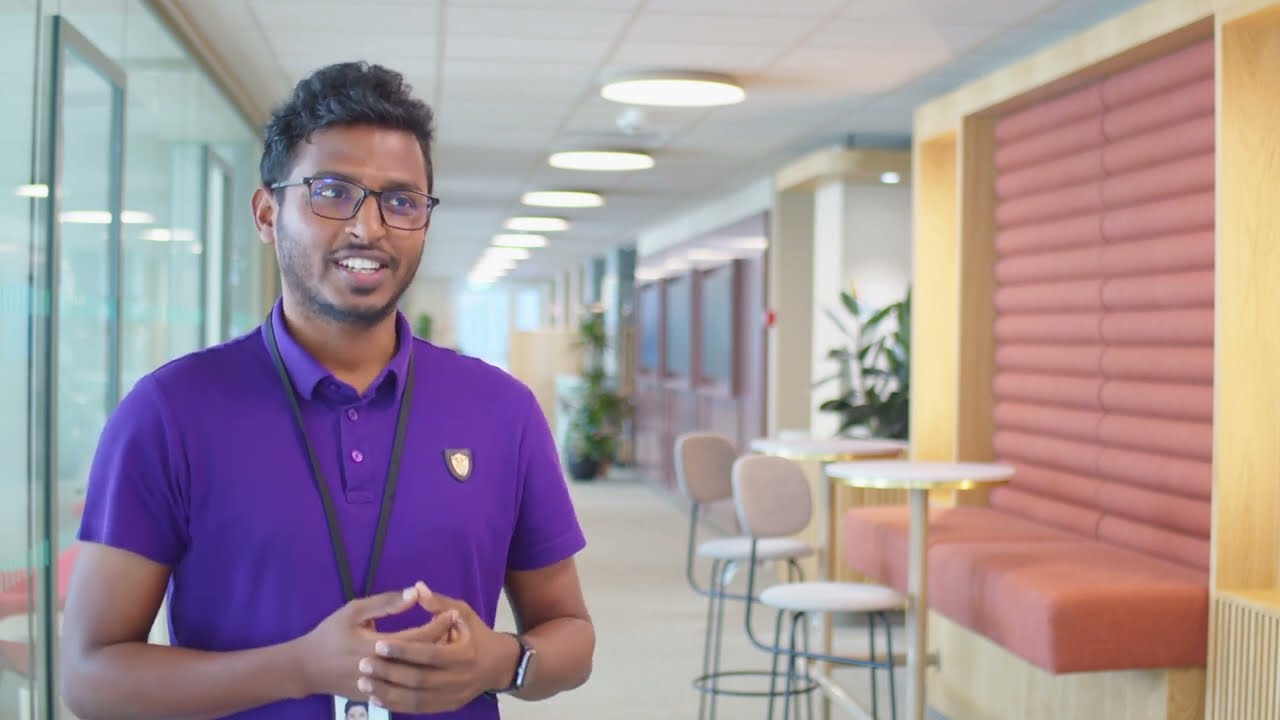
Hi, my name is
PhD Researcher at NTNU working at the intersection of computer vision, deep learning, and ultrasound medical imaging — developing novel methods for myocardial motion tracking and strain analysis in echocardiography.
I am a PhD Candidate in the Department of Circulation and Medical Imaging (ISB) at NTNU, Norway, developing AI-driven methods for echocardiographic analysis. My work sits at the intersection of computer vision, deep learning, and clinical cardiology.
Before my PhD I completed an Erasmus Mundus M.Sc. in Marine and Maritime Intelligent Robotics (jointly at UTLN and NTNU), interned at SINTEF Digital on 3D reconstruction with Neural Radiance Fields (NeRF), and worked 1.5 years as a Software Engineer at SAMSUNG R&D on Augmented Reality and various SDKs.
I hold a B.Sc. in Computer Science and Engineering from United International University, Bangladesh, with an Erasmus Mundus exchange and bachelor's thesis at Universität Bremen, Germany.
Designed a novel coarse-to-fine deep learning architecture for long-range myocardial point tracking in 2D echocardiography—enabling automated cardiac motion analysis and enhancing clinical strain assessment. Try the Hugging Face demo to see it in action.
Identified directional bias in cardiac motion estimation, developed effective mitigation strategies, and fine-tuned state-of-the-art models—resulting in improved robustness and generalization across diverse echocardiography scenarios.
Developed a multi-label video classification framework for automated underwater ship hull inspection—enabling simultaneous detection of multiple conditions in underwater video data collected by an ROV and advancing automation in subsea robotics and industrial inspection workflows.
Adapted Neural Radiance Fields to reconstruct detailed 3D models of challenging objects from monocular image sequences for robotic camera. Explored scene representation, volumetric rendering, and novel-view synthesis — work conducted at SINTEF Digital that directly led to the master's thesis.
Built and documented an end-to-end Unity integration for Samsung's Galaxy AR Emoji SDK — enabling developers to drive custom avatar animations at runtime using Android intents, Animator controllers, and external rigs from tools like Mixamo. Published as an official Samsung Developer blog.
Designed and developed a reference Unity game demonstrating full Samsung In-App Purchase integration — covering plugin setup, consumable and non-consumable purchase flows, receipt validation, and item consumption via the Galaxy Store backend. Published as an official Samsung Developer blog.
Built a Unity game pipeline demonstrating end-to-end publishing to Galaxy Store through the Unity Distribution Portal — integrating IAP, configuring UDP repacking, and producing store-ready APKs without per-store SDK rewrites. Published as an official Samsung Developer blog.
Many more academic & toy projects from my M.Sc. and B.Sc. years live on GitHub ↗
Advancing Myocardial Function Imaging in Echocardiography using Vision Intelligence
Designed a coarse-to-fine deep learning model for long-range tissue motion estimation across full cardiac cycles in echocardiographic sequences. Achieved 67% average position accuracy and 2.86px median trajectory error, with 25% relative improvement in GLS computation. Published at MICCAI 2024.
Identified systematic directional motion bias in modern point tracking models across cardiac views, and proposed impartial motion training with tailored augmentations to correct it. Achieved a 60.7% boost in position accuracy and 61.5% reduction in trajectory error, with improved GLS alignment to expert tools. Published at ICCV 2025 Workshop CVAMD.
Explore an AI-assisted, human-in-the-loop system that enhances strain measurement accuracy and supports efficient clinical data annotation workflows.
Validate the fully automated strain estimation pipeline across relevant patient cohorts to establish clinical applicability and reliability for cardiac diagnosis.
Curated and annotated an ROV-collected underwater ship hull video dataset with multi-label ground truth covering concurrent defect categories — corrosion, marine growth, and coating degradation — establishing the benchmark for the full study.
Designed MViST — a Vision Spatiotemporal Transformer that fuses spatial per-frame features with temporal self-attention across consecutive video frames, enabling simultaneous detection of multiple hull conditions from ROV footage.
Trained and evaluated MViST against CNN and single-frame ViT baselines, demonstrating superior multi-label classification performance and robustness under challenging underwater visibility conditions.
Published findings at OCEANS 2023, Limerick (IEEE) and presented at the NORA Annual Conference 2023, Tromsø — in collaboration with SINTEF Digital, NTNU, and the LIACI project team.
Neural Radiance Field (NeRF) for 3D Object Reconstruction
Part of DeepStruct — 3D imaging of transparent & challenging objects for logistics automation · Client: Zivid
Studied the Neural Radiance Field framework in depth: 5D coordinate-based continuous scene representation, volume rendering, positional encoding, and hierarchical volume sampling. Evaluated NVIDIA's Instant NGP with multiresolution hash encoding, which reduces training from hours to seconds while maintaining reconstruction quality.
Built a multi-view capture and processing pipeline for custom industrial objects. Used COLMAP structure-from-motion for camera pose estimation from high-resolution images, and deployed Instant NeRF training on both a Windows workstation and a Linux HPC cluster.
Reconstructed 3D meshes of industrial objects including transparent and reflective surfaces — a core challenge for logistics automation. Studied the impact of image resolution, capture sparsity and direction, background removal quality, and marching cube resolution on the final mesh accuracy.
Compared Instant NeRF against NVIDIA's 3D MoMa (CVPR 2022) — which simultaneously extracts mesh, textures, and lighting — on the same object. NeRF achieved superior reconstruction quality in minutes with minimal GPU memory, versus hours for 3D MoMa, establishing it as the preferred approach for the project.
SDK Developer Evangelism & Multi-platform Engineering
Products: Galaxy Watch Face · Samsung IAP · AR Emoji SDK · Samsung DeX · Galaxy Store · Unity UDP
Served as the primary technical contact for third-party developers integrating Samsung SDKs — covering Galaxy Watch Face, Samsung IAP, AR Emoji SDK for Unity, Samsung DeX, Galaxy Store, and Unity Distribution Portal (UDP). Diagnosed and resolved integration issues across Android, Unity, Windows, and Tizen platforms, rapidly switching between C#, Java, Kotlin, and C++ as needed. Also executed structured pre-release validation cycles before every new SDK version — verifying previously reported issues were resolved, confirming backward compatibility, and stress-testing new features across target platforms.
Authored integration guides and feature spotlights published on Samsung Developers — translating complex SDK internals into clear, step-by-step tutorials for external developers. Writing spanned Unity plugin setup, in-app purchase flows, AR Emoji customisation pipelines, and DeX multi-window adaptation patterns, directly reducing support ticket volume for new releases.
Dedicated a portion of work time to Samsung-internal research initiatives and participated in internal professional programming competitions — maintaining high engineering standards and staying current with emerging platform capabilities. This cadence of structured research and competitive programming sharpened algorithmic problem-solving skills applied directly to SDK architecture decisions.
Also on Google Scholar · ResearchGate · ORCID
I'm always open to research collaborations, new opportunities, and conversations about applying AI and computer vision to real-world industry challenges. Whether you're building something exciting or just want to connect — feel free to reach out!
Say Hello →